


As we inch towards 2023, eCommerce has become a mainstream phenomenon in all our lives, and the sports sector is emerging as one of the biggest adopters as people have become more conscious of their health.
However, unlike other apparel and products, it is difficult to reflect the value in the sports goods industry, which continues to struggle with eCommerce adoption.
Also, the lead times, go-to-market time, and fulfillment need to be at par with the regular clothing, making it difficult for new entrants since the shelf life is generally longer in their case.
To help readers from the sports industry decide on integrated eCommerce solution adoption, experts at i95Dev have curated this article to discuss four success stories of sports brands’ eCommerce journeys.“
Let’s begin:
K2 Sports
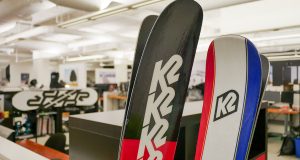
K2 Sports is a US-based premier winter wear brand focused on creating unforgettable experiences.
Its product portfolio comprises Skiing equipment, snowboards, snowshoes, and safety equipment, while its competitors consider its marketing strategy ingenious.
As a pioneer in winter wear innovation, K2 Sports realized it was being held back by its eCommerce platform, Sales Commerce Cloud.
The leaders at K2 Sports felt that they couldn’t deliver a cutting-edge customer experience as the Sales Commerce Cloud platform wasn’t cloud-based and had little support for APIs.
On top of that, the maintenance and development costs also limited K2 Sports’ ability to scale their business, especially regarding the international market.
Thus, it decided to go for a feature-rich eCommerce platform that extended a marketer-friendly setup at affordable prices.
After extensive research, K2 Sports decided to go for Big Commerce as it allowed API-first headless configuration, while they selected Content stack as their frontend’s CMS.
The integrated eCommerce setup helped K2 Sports expand its network to 16 sites and launch eight brands within nine months.
While the integrated eCommerce solution helped K2 optimize its content marketing strategy, it also achieved a 75% higher web development speed and a 90% hike in publishing rate, throttling up its productivity by a staggering 50%.
Wish to know the multiple benefits of a modern integrated eCommerce solution?
Adidas

If you know a sneakerhead, you know that sneaker and sportswear manufacturers operate under high-pressure conditions. Everything must happen at lightning speed—from product design and go-to-market timelines to order fulfillment—placing enormous demands on their eCommerce infrastructure.
As shown in the graph below, Adidas has experienced tremendous growth in its eCommerce sales.
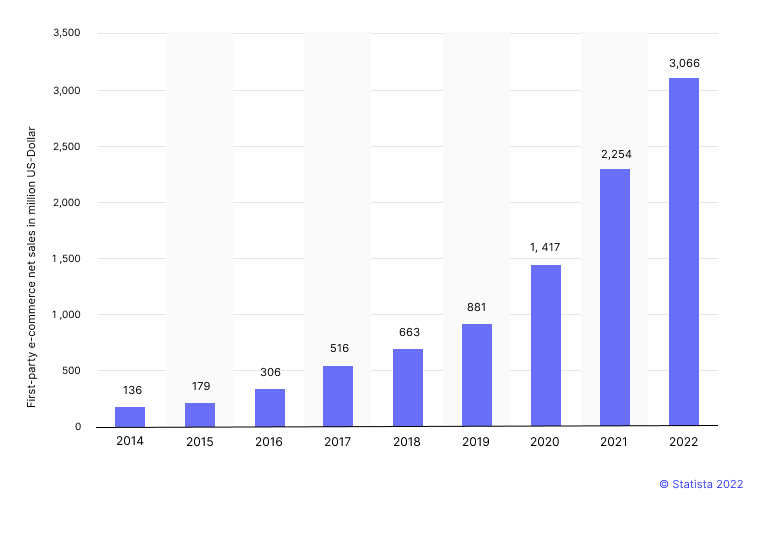
Adidas needed a cloud-native solution that offered excellent scalability, agility, reliability, and efficiency to support its flash sales and overall business model. These capabilities were essential for accelerating innovation cycles and enhancing the customer experience.
Before 2019, the company invested in transitioning to a cloud-based eCommerce system powered by Kubernetes-based microservices at the heart of its connected ecosystem.
Concerned about vendor lock-in, Adidas chose open-source technologies. To implement an operable, observable, and flexible platform, it deployed its Finland-based solution across five global locations, supported by CI/CD pipelines processing more than 100,000 builds per month.
The new eCommerce platform helped Adidas remain resilient during the pandemic while continuing to grow. It also enabled the company to build a 750-terabyte data lake and transition 200 developers to the new platform almost overnight.
Arc’teryx

Arc’teryx describes itself as a high-performance outdoor equipment company that serves people passionate about adventure and exploration.
The company realized that the absence of a modern mobile app was inconsistent with its brand image and weakened its digital presence. Although it already had an app, it was not capable of meeting customer expectations. As a result, Arc’teryx upgraded its eCommerce platform and integrated it with a new mobile application.
The project delivered the following results:
- 16% reduction in crash rates
- 39% increase in app-based sales conversions
- 29% increase in app-based orders
- 8% increase in repeat visitors
- 8% increase in daily active users
- 57% reduction in app uninstallations
Overall, Arc’teryx benefited significantly from the transition. The company also gained better insights into promotions and inventory management, helping it evolve into a mobile-first eCommerce leader.
Sportbike Track Gear
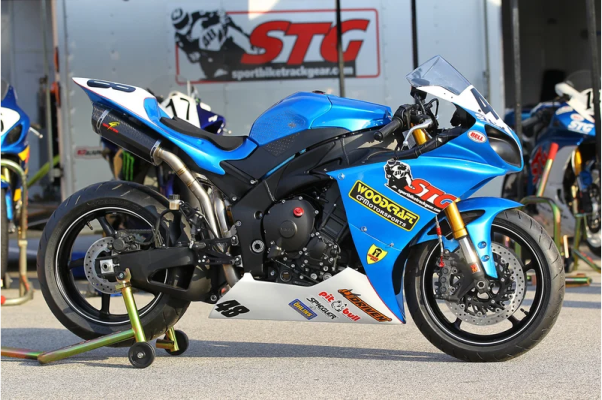
Sportbike Track Gear is much more than a motorsport brand—it represents the adventure lifestyle on two wheels.
It was a thriving success and enjoyed tremendous popularity. However, its eCommerce platform, ProStores, was discontinued, and Sportbike Track Gear needed to find a new solution quickly.
After evaluating multiple platforms, including Magento, Sportbike Track Gear ultimately chose BigCommerce to manage its online sales.
With the help of an integrated eCommerce connector, the company was able to automate day-to-day operations, manage accounts, organize merchandise, and execute sales campaigns more efficiently.
The company experienced a 16% increase in traffic, lower bounce rates, and a significant 21% increase in conversions. It also saved more than $100,000 in development and hosting costs, strengthening its competitive position.
Wrap Up
Leading brands like Adidas and Nike have embraced integrated eCommerce solutions, while many smaller sports equipment companies continue to rely on marketplaces like Amazon.
However, an integrated eCommerce solution enables businesses to leverage multiple platforms and selling channels—including social commerce—without the burden of manually managing operations.
Feel free to get in touch with i95Dev for expert guidance on implementing an integrated eCommerce solution for your sports equipment company.


