


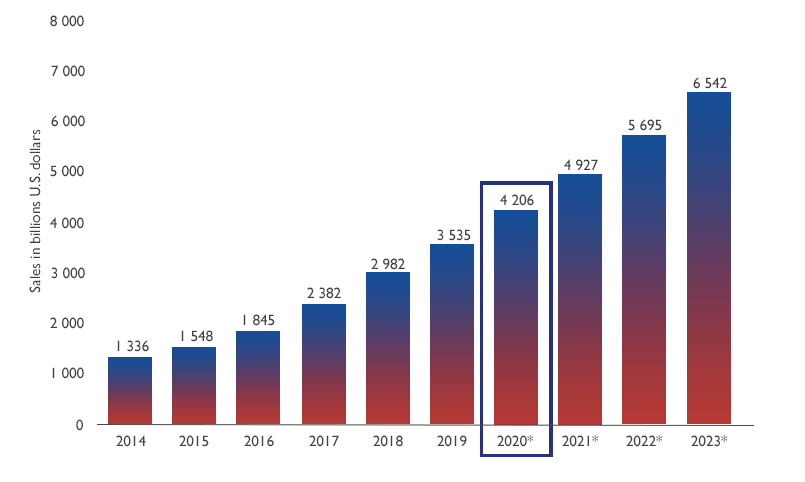
Shopify powers 427,676 eCommerce stores, and 820,000+ merchants currently use it for their online businesses. It is arguably one of the best platforms, serving 800,000 businesses across 175 countries. On the other hand, market volatility is increasing the need for dedicated ERP systems. The ERP market is expected to reach USD 78.40 billion by 2026, while 51% of CIOs prefer cloud ERP solutions. In this article, we explore how Shopify-ERP integrations improve business agility.
What Is ERP Solution and How It Helps Your Business
An ERP suite is a set of software solutions used to manage business processes through a centralized database. ERP applications are typically SaaS-based and include modules like MRP, CRM, HRM, and Supply Chain Management. They provide visibility across departments and stakeholders.
- Manual data entry using spreadsheets
- Difficulty retrieving data from multiple sources
- Mismanaged workflows
- Inefficient resource utilization
- Poor responsiveness to change
- Redundant processes
ERP systems help automate, integrate, and optimize business operations, improving ROI and enabling real-time decision-making.
Shopify and ERP Implementation
Shopify is an eCommerce platform that allows businesses to manage products, payments, inventory, and shipping. It also integrates with marketplaces like Amazon and Facebook.
- Cloud-based model with 99.99% uptime
- Unlimited bandwidth and APIs
- High scalability
- Quick deployment
- No dedicated IT team required
- 24/7 customer support
- All-in-one ecosystem
- Cost-effective compared to legacy platforms
You can integrate Shopify with ERP systems like Microsoft Dynamics, Acumatica, NetSuite, SAP Business One, and Sage 100.
- Difficulty syncing sales and inventory
- High IT infrastructure costs
- Repetitive manual tasks
- Complex workflows
- Poor data visibility
Points to Keep in Mind While Selecting ERP
Choose an ERP that supports omnichannel sales, mobile-first strategy, integrations, automation, and data security. Ensure compatibility with inventory, shipping, and accounting systems.
7 Ways ERP Integrations Boost Business Agility
#1 Improved Resource Allocation
ERP integration enables better planning and allocation of resources.
#2 Better Decision Making
BI tools generate insights for better decisions.
#3 Omnichannel Support
Automation improves synchronization across channels.

#4 Vendor & Logistics Management
ERP improves coordination with vendors and shipping partners.

#5 Process Optimization
Reduces redundancy and improves system stability.
#6 Inventory & CX Improvement

Real-time inventory updates enhance customer experience.
#7 Multi-Store Visibility
ERP enables seamless management of multiple channels.
Key Benefits of Integration Solutions
Integration solutions ensure smooth data flow and high ROI.
- Standardized workflows
- Advanced analytics
- API-first approach
- Multi-platform support
- Bidirectional sync
- Better customer experience
Over to You
Are you looking to integrate your Shopify store with ERP systems like Microsoft Dynamics, NetSuite, SAP, or QuickBooks?


