


It is inevitable for growing eCommerce businesses who are looking for a platform to evaluate Magento 2 and BigCommerce. In this part of our Super 7 series, we will look at the 7 key factors that help you choose between Magento and BigCommerce.
The standard yardstick should be how well the eCommerce platform aligns with your long-term goals, simplifies operations, and supports growth. All comparative factors in Super 7 are based on these objectives.
Branding and Presence
The brand gap between Magento and BigCommerce is significant. Magento was established with the sole purpose of optimizing eCommerce, which reflects in its popularity. According to a report by Datanyze, Magento holds the 4th position compared to the 12th position held by BigCommerce.
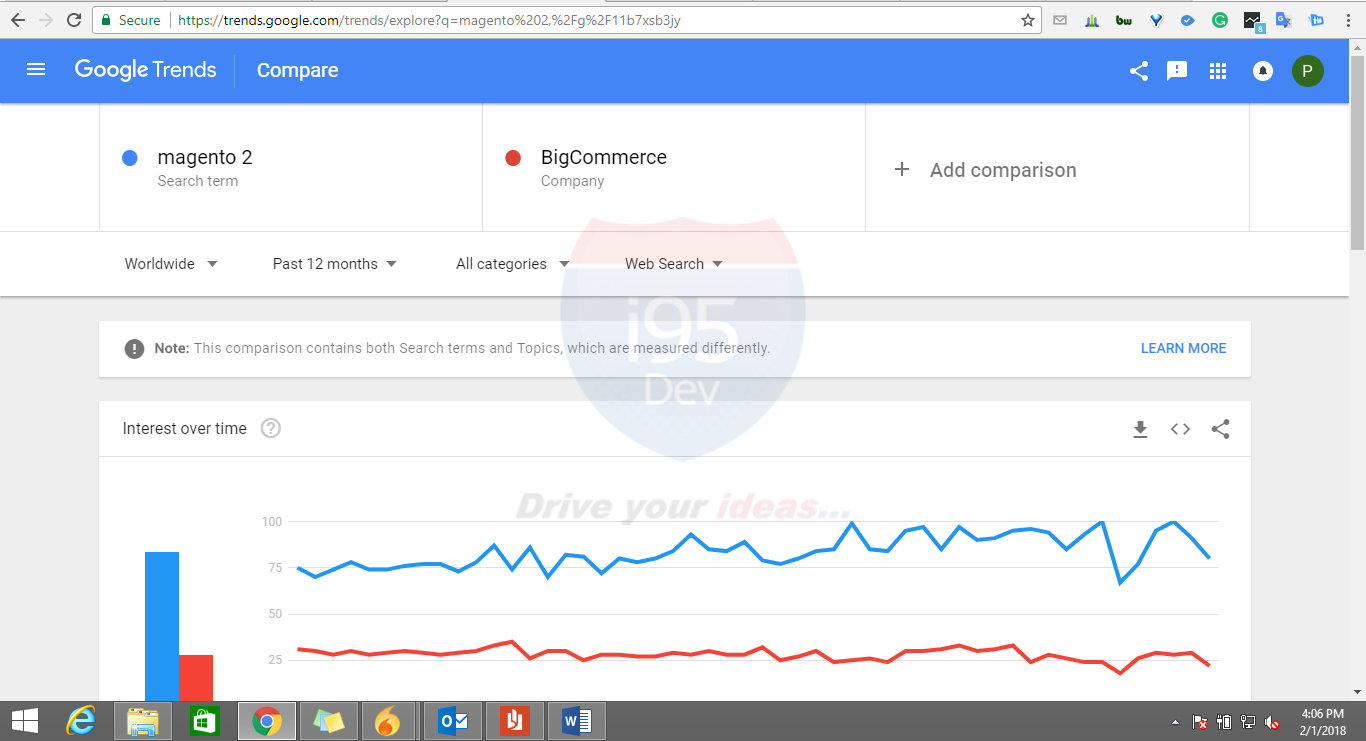
Even a current trend comparison between Magento 2 and BigCommerce shows a huge disparity. There are 15,686 sites in the Alexa Top 1M using Magento compared to 1,457 using BigCommerce.
Magento 2 clearly leads due to its open-source nature and strong community support. This results in a robust agency ecosystem that can continuously improve your platform. Unlike BigCommerce, Magento gives you full control over your eCommerce site.
Ownership and Hosting
This is a critical factor influencing your business long term. Magento 2 is self-hosted, whereas BigCommerce is hosted.
There are excellent Magento hosting providers like Nexcess. With Magento, you retain full ownership of your data, which is crucial for any eCommerce business.
BigCommerce handles hosting as part of its package. However, it limits data ownership and flexibility. Once you choose BigCommerce, you cannot host your store elsewhere, making scalability and control limited.
Read more about importance of hosting.
Theme and Design
Design and theme define your brand identity. Both Magento 2 and BigCommerce offer responsive and visually appealing themes.
Magento 2 allows full customization due to its open-source nature. Themes are available via third-party providers and Magento Marketplace.
BigCommerce offers a limited number of free themes and restricted customization options, reducing flexibility.
Marketing and SEO
Both platforms offer strong SEO and marketing capabilities.
Magento 2 includes advanced SEO features like product page optimization, layered navigation, and analytics for tracking customer behavior and campaign performance.
BigCommerce also supports SEO and social media integration effectively. Overall, both platforms are comparable in this area.
Marketplace Features
Expanding to marketplaces like Amazon, eBay, and Etsy is essential for growth.
Magento has a strong track record in marketplace integration. Learn more here.
BigCommerce also supports integrations with major marketplaces, offering similar capabilities.
Security
Security is a critical factor when choosing an eCommerce platform.
Magento 2 offers robust security with regular updates and patches. Its open-source nature allows businesses to implement custom security layers.
BigCommerce also provides strong security and is PCI compliant, handling hosting-level security.
Both platforms are comparable in terms of security.
Product Support
Support can significantly impact your business success.
Magento 2 benefits from a global developer community, offering flexibility, customization, and extensive support resources.
BigCommerce provides dedicated support but lacks the flexibility of an open-source ecosystem.
If you are also considering Shopify, read our blog on Magento 2 vs Shopify.
Conclusion
i95Dev has worked with companies globally since 2000 and is a Magento Silver Certified eCommerce solutions provider, serving both B2B and B2C clients.
We also offer integration solutions between Magento and leading ERP systems like Dynamics AX, GP, NAV, SAGE, SAPB1.
If you are looking to scale your eCommerce operations, contact us at info@i95dev.com.


